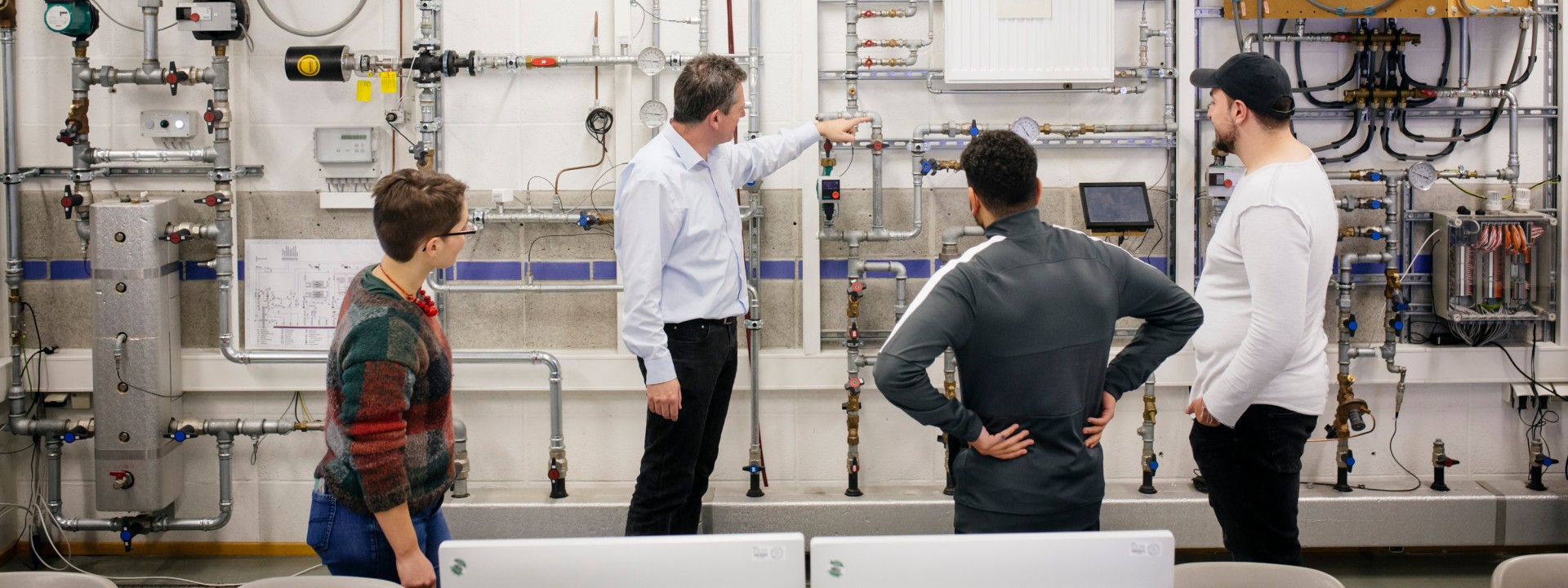
My degree course – Energy and Building Services Engineering
Important information, downloads and documents for your degree programme.


The most important links for your studies.

Carrying out energy consultations after completing your degr

Students enrolled on the Energy and Building Services Engineering degree programme from the 2021/22 winter semester onwards can, as part of our bachelor's degree programme, fulfil the requirements to be listed as an energy efficiency expert following an examination by the German Energy Agency (DENA).
In addition to the EGB degree programme, students must undertake and pass the compulsory elective modules included in the programme:
- Sustainable Construction (Prof. Thilo Ebert)
- Energy and Computer-Based Assessment and Planning of Buildings (Prof. Prof. Ferdinand Sigg)
Once you have completed and passed both compulsory elective modules and upon completion of your Bachelor’s degree, you will receive a completed certificate of further training.
You can then make the submission, together with your Bachelor’s degree certificate, to DENA:
Further information on the list of energy efficiency experts
Legal Information
Laboratory practical
Internship in Plant Engineering and Measurement Technology
Laboratory practical in the bachelor's degree programme in Energy and Building Services Engineering
Download here
| Internship topic | ||
|---|---|---|
| Heating drinking water using the flow-through principle | Prof. Dr. Franz-Josef Ziegler | G 4.01 |
| Valve characteristic curve | Prof. Thilo Ebert | G 0.14 |
| Pressure drop across piping components | Porf. Dr. Philipp Riegebauer | G 0.29 |
| Wastewater test rig | Prof. Dr. Martin Ehlers | G 0.22 |
| Conductivity measurement | E 401b | |
| Water hardness | E 401b | |
| Measurements in a direct current circuit | Dr. Paerschke | G 0.09 |
| Measurements in an alternating current circuit | G 0.09 | |
| Simulation of control loops | Prof. Dr. Helmuth Mühlbacher | G 0.13 |
| Solar cell optocoupler | Prof. Dr. Helmuth Mühlbacher | G 1.31 |
| Hydraulics in heating systems | Prof. Dr. Helmuth Mühlbacher | G 0.09 |
| Standard efficiency of gas boilers | Prof. Wolfgang Wieser | G 0.08 |
| Thermal building simulation | Prof. Dr. Madjid Madjidi | G 1.33 |
| Measurement technology for air-conditioning systems | Prof. Dr. Martin Renner | G 0.16 |
| Fan performance curve | Prof. Dr. Martin Renner | G 0.16 |
| Determination of gross and net calorific values using a calorimeter | G 0.22 | |
| Determination and variation of a heat pump’s COP | Prof. Werner Schenk | G 0.17 |
| Heat transfer in a latent thermal energy storage system | Prof. Dr. Christian Schweigler | G 0.08 |
| Cost planning | Prof. Martin Vielhauer | G 0.13 |
| Internship topic | Supervisor | Room |
|---|---|---|
| Absorption chiller | Prof. Werner Schenk | G 0.14 |
| System hydraulics with control systems | Prof. Dr Helmuth Mühlbacher | G 0.09 |
| COP of an R290 air-source heat pump | Prof. Werner Schenk | G 0.14 |
| Steam power station, field trip | Prof. Dr. Roland Kraus | |
| Compressed air supply | Prof. Dr. Philipp Riegebauer | G 0.29 |
| Cathodic corrosion protection of gas and water pipelines | Prof. Wolfgang Wieser | G 0.10 |
| Determination of iron and manganese in groundwater | E 501a | |
| Building automation – KNX bus | Prof. Dr. Helmuth Mühlbacher Ulf Martienßen | G 0.09 |
| Ion exchangers, water softening | E 501a | |
| Humidifiers in air-conditioning systems | Prof. Dr. Marin Renner LB Nguyen | G 0.16 |
| Programmable logic controllers | Dr. Paerschke | G 0.09 |
| Room airflow simulation | Prof. Dr. Madjid Madjidi | G 1.33 |
| Building automation: CO₂ control | Prof. Dr. Helmuth Mühlbacher | G 0.13 |
| Sieve test | Prof. Thilo Ebert | G 0.14 |
| Scheduling | Prof. Martin Vielhauer | G 0.13 |
| Drinking Water Hygiene | Prof. Dr. Martin Ehlers Christian Allmanshofer | G 0.22 |
| Turbo Compressor using water as the refrigerant | Prof. Dr. Christian Schweigler | G 0.08 |
| Heat recovery systems | Prof. Dr. Martin Renner Uwe Winkler | G 0.16 |
| Efficiency of a PEM electrolyser for hydrogen production | Prof. Wolfgang Wieser | G 0.08 |
Download here
Information on the internship semester
The learning objectives and content of the Practical Training Semester, as well as the format and organisation of the courses accompanying the practical placement, are set out in the training plan for the Practical Training Semester of the bachelor's degree programme in Energy and Building Services Engineering (EGB).
Training Plan for the Practical Study Semester
Download form: Confirmation for dual-study students
You can find detailed information and dates for the Practical Training Semester in the guide to the Practical Training Semester.
Guide to the Practical Training Semester 2025/2026
Further information on the Practical Training Semester can be found on the noticeboard and in the Moodle course ‘Practical Semester’.
Information on bachelor's degree and master's theses
As part of their bachelor's degree or master's degree thesis, students must attend the relevant seminars. Attendance is compulsory to the following extent:
Bachelor's degree:
Attendance at at least 20 seminar presentations
Master's degree:
Attendance at at least 80 per cent of all seminar lectures in the relevant semester
The dates of the seminars will be published on Moodle.
Seminar programme:
- A 15-minute presentation on a bachelor's degree or Master’s thesis
- 10-minute discussion
The bachelor's degree or master's degree seminar counts towards the final mark for the final assignment.

Our experiences abroad



CDHAW double degree
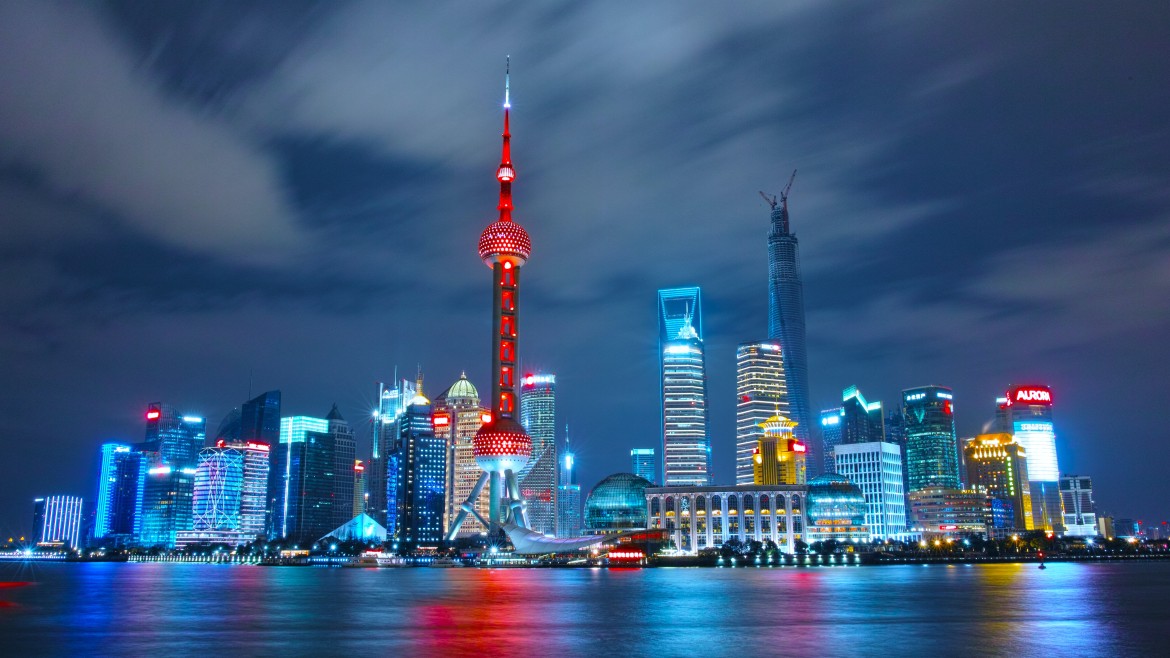
The Energy and Building Services Engineering degree programme offers students the opportunity to undertake a study period and work placement abroad at the Sino-German University of Applied Sciences (CDHAW) in Shanghai, China.